
Estate & Foreclosure Cleanouts
Containers for property clearances where access, authority and timing all have to line up.
Estate and foreclosure clearances carry constraints an ordinary cleanout does not. There is usually a deadline attached to a sale, a closing or a handover; access may run through a lockbox, an agent or a court-appointed representative; and more than one party may have a view on what leaves the property.
Those are coordination problems rather than container problems, but they determine whether a container can be delivered and collected without anybody being blocked. Settling them before delivery is what keeps the clearance on schedule.
Typical projects
- Clearing a property before listing or closing
- Post-foreclosure clearance ahead of resale
- Executor-led clearance of an estate property
- Emptying a long-unoccupied house
- Clearing a property ahead of renovation for resale
- Removing abandoned contents after a tenancy ends
Confirm authority and access first
Before anything is scheduled, be clear about who is authorizing the clearance and who controls access. In estate work that is often an executor or a family member; in foreclosure work it is usually an asset manager, a listing agent or a contractor working for them.
We also need practical access details: whether the property is secured, who will be present, whether a gate, lockbox or HOA permission is involved, and whether the driveway is usable for a truck. Occupied or disputed properties are worth resolving before a container is booked.
Judging the volume
Properties cleared under these circumstances are usually fuller than they look from outside, and often include a garage, a shed or a loft in addition to the living space. Photographs of each area answer this faster than any description.
Where records, personal effects or items of value may be present, plan a separation pass before the container arrives. Once something is in the container it is gone, and there is rarely a second chance to recover it.
Timing around a deadline
If the clearance is tied to a closing or a listing date, tell us the date and the days you plan to work. We confirm delivery and pickup windows with you rather than assuming a schedule, so the container is not the thing holding up the sale.
Three steps.
Tell us about the property
Send the address, the scope, the access arrangement and the deadline you are working to.
Arrange delivery
We confirm the container, placement and a delivery window that works for whoever is opening up.
Schedule pickup
We collect once the clearance is done, or swap containers if the property needs more than one.
Materials, site access, rental duration and availability are confirmed as part of your quote. SteelPoint supplies and collects the container — loading is carried out by you or by a crew you arrange.
Questions about this job.
No. We provide and collect the container. The clearing, sorting and loading is done by you or by a crew you arrange — often a cleanout contractor working for the estate or the asset manager.
Usually, provided the placement area is accessible and unambiguous and we have clear instructions. Gated or secured properties may need someone present.
Tell us as soon as it looks that way and we will arrange a swap or a second container rather than leaving the clearance half finished.
Give us your target dates when you request the quote. We confirm delivery and pickup windows with the quote rather than promising a turnaround in advance.
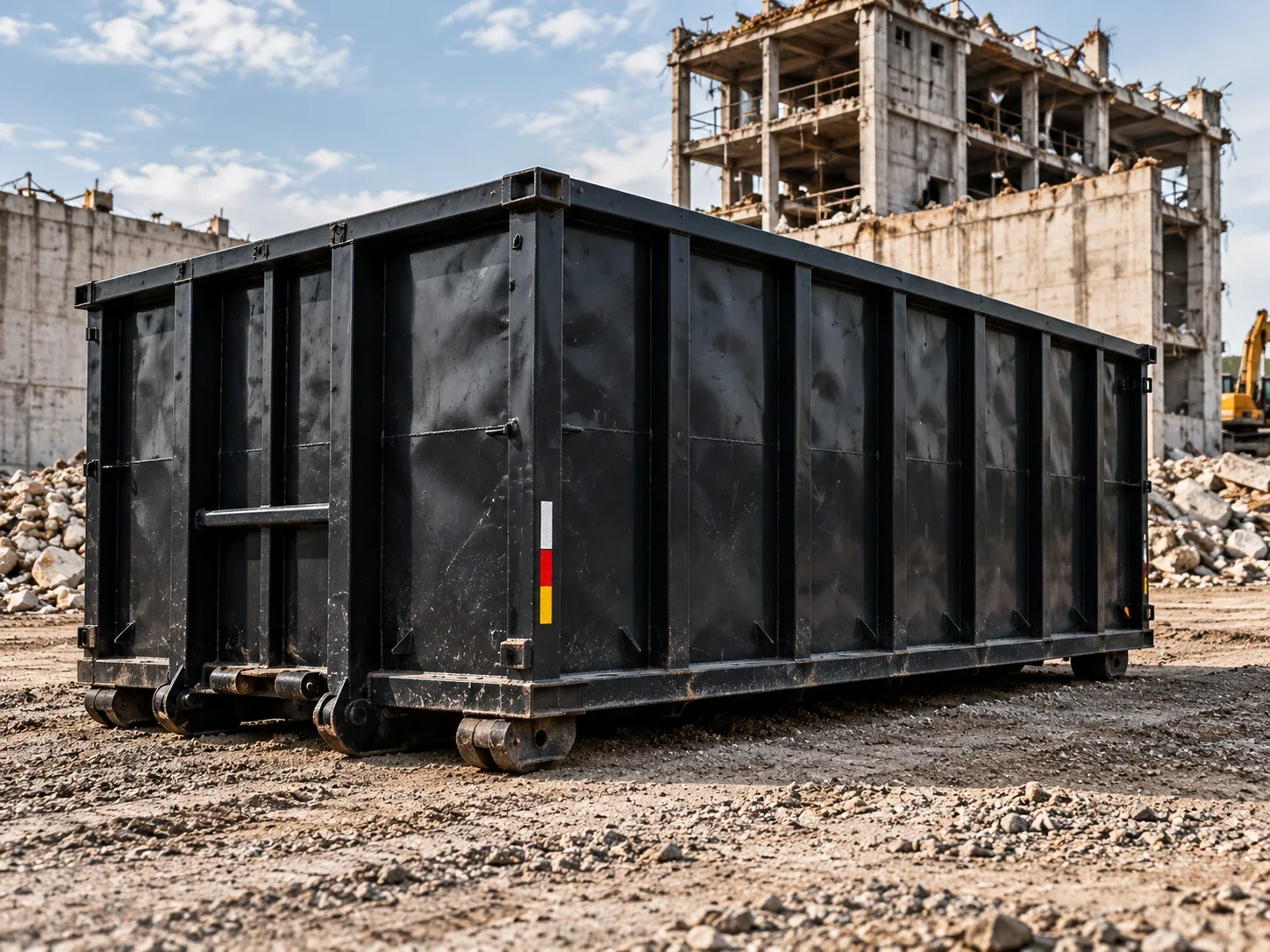
Photography shown is illustrative placeholder imagery, not photographs of SteelPoint equipment or completed projects.
Get this job quoted.
Tell us the material, the site and the timing. We will confirm what fits and send a quote — no pricing is published, because every job is different.