Demolition Debris Disposal
Containers and disposal for demolition debris — a separate thing from carrying out the demolition.
This page is about handling the material a demolition produces. It is not the demolition itself. Plenty of contractors do their own demolition and simply need containers on site and a disposal route for what comes out — that is what this covers.
If you want SteelPoint to carry out the demolition work, that is our demolition service, and it is a different conversation with a different scope.
Typical projects
- Concrete slab, patio and driveway removal
- Interior strip-out down to the structure
- Masonry, block and brick removal
- Structural timber and framing removal
- Outbuilding, shed and structure teardown debris
- Mixed demolition debris from a general contractor
Know your streams
Demolition debris separates into a small number of streams that behave very differently. Concrete, block and masonry are dense and usually go into their own container. Metal is recyclable and worth keeping clean. Timber and mixed construction debris form a third group. Anything with plaster, insulation, adhesives or finishes attached generally counts as mixed.
Tell us which streams your job produces and roughly how much of each. Where the sequence allows separation on site, the material usually ends up somewhere better and the container plan gets simpler.
Concrete and masonry
Clean concrete — meaning concrete without rebar mesh tangles, soil, timber or general debris mixed in — is the stream with the clearest onward route. Contaminated concrete is much harder to place.
Because of the weight, concrete and masonry are typically matched to a dedicated container with material-specific limits. We will confirm those with your quote rather than assuming any container will take it.
Placement and sequencing
Demolition sites change shape as the work progresses, so agree placement against where the debris will actually be at each stage — not just where there is room on day one. Tell us when the heavy phases fall so swaps are scheduled rather than urgent.
Three steps.
Tell us about the debris
Describe the demolition, the streams it produces and roughly how much of each.
Arrange delivery
We confirm containers for each stream, placement, and the limits that apply to heavy material.
Schedule pickup
Containers are swapped and collected against your schedule; recoverable streams are routed accordingly.
Materials, site access, rental duration and availability are confirmed as part of your quote. SteelPoint supplies and collects the container — loading is carried out by you or by a crew you arrange.
Questions about this job.
No. This is containers and disposal for debris that somebody else is producing. If you want SteelPoint to carry out the demolition, see the demolition service page — the scope, the assessment and the quote are all different.
Generally not. Concrete is dense enough to need a container matched to it, with material-specific limits confirmed before delivery.
Concrete without soil, timber, plaster, insulation or general debris mixed in. Clean concrete has a clear onward route; contaminated concrete is much harder to place and is often handled as mixed debris.
Yes, and it is usually worth doing. Clean metal is recyclable — see our recycling service for what we accept and how separated it needs to be.
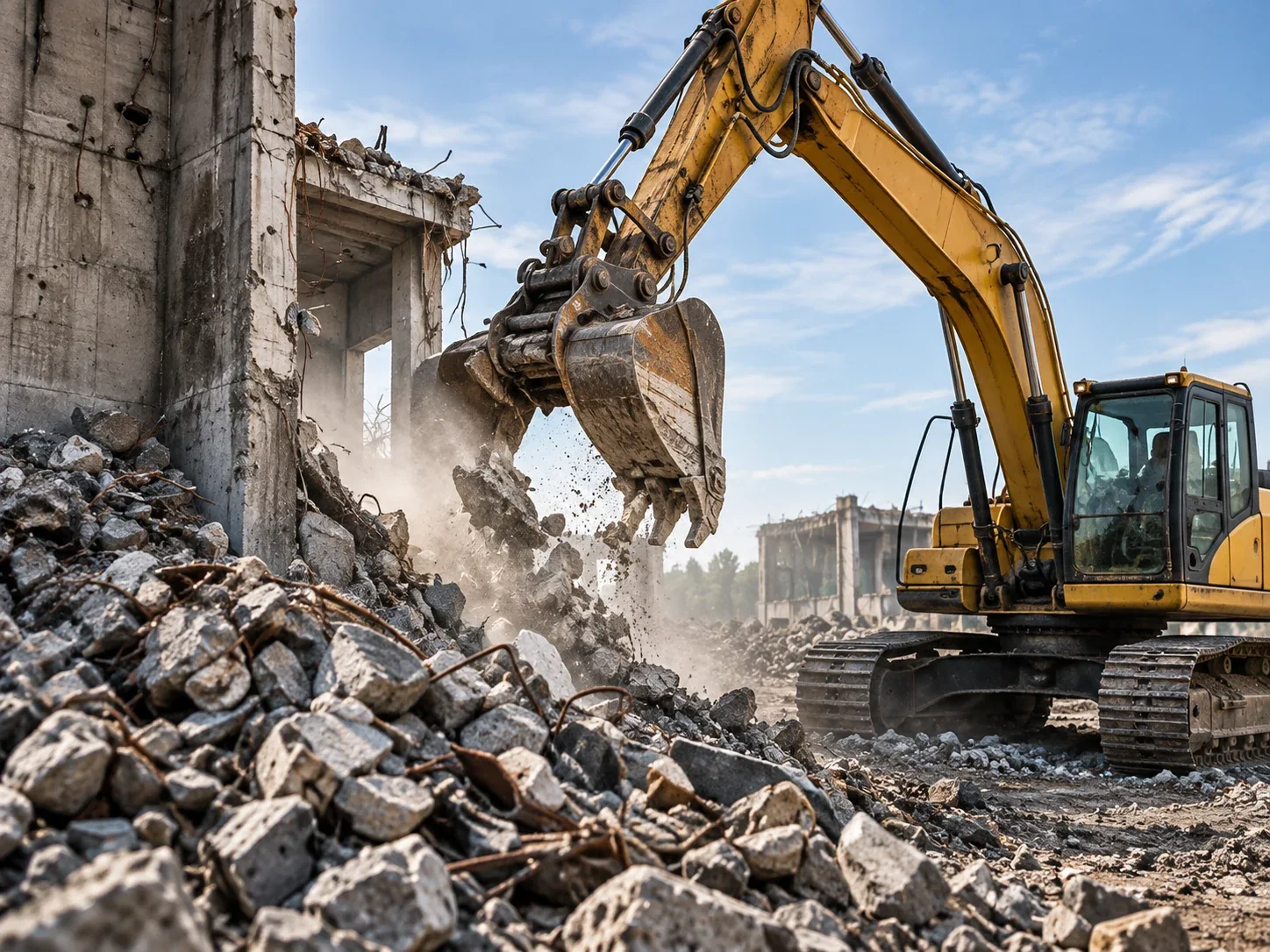
Photography shown is illustrative placeholder imagery, not photographs of SteelPoint equipment or completed projects.
Get this job quoted.
Tell us the material, the site and the timing. We will confirm what fits and send a quote — no pricing is published, because every job is different.