Flatbed Hauling
Flatbed transport for steel, building materials and other cargo that loads from the side or the top.
What flatbed hauling covers
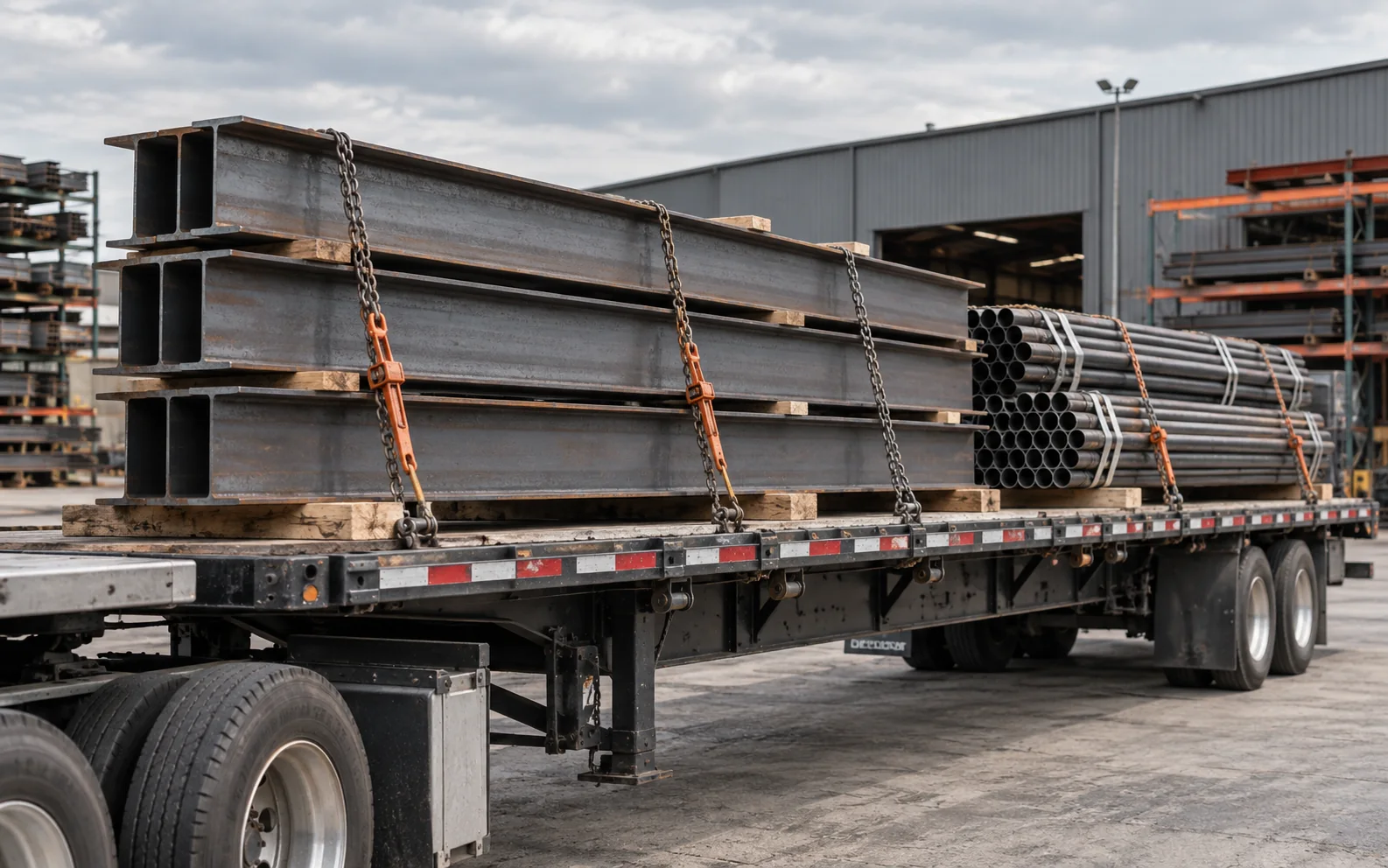
Steel & Beams
Stock, beams and bundled pipe that load from the side.
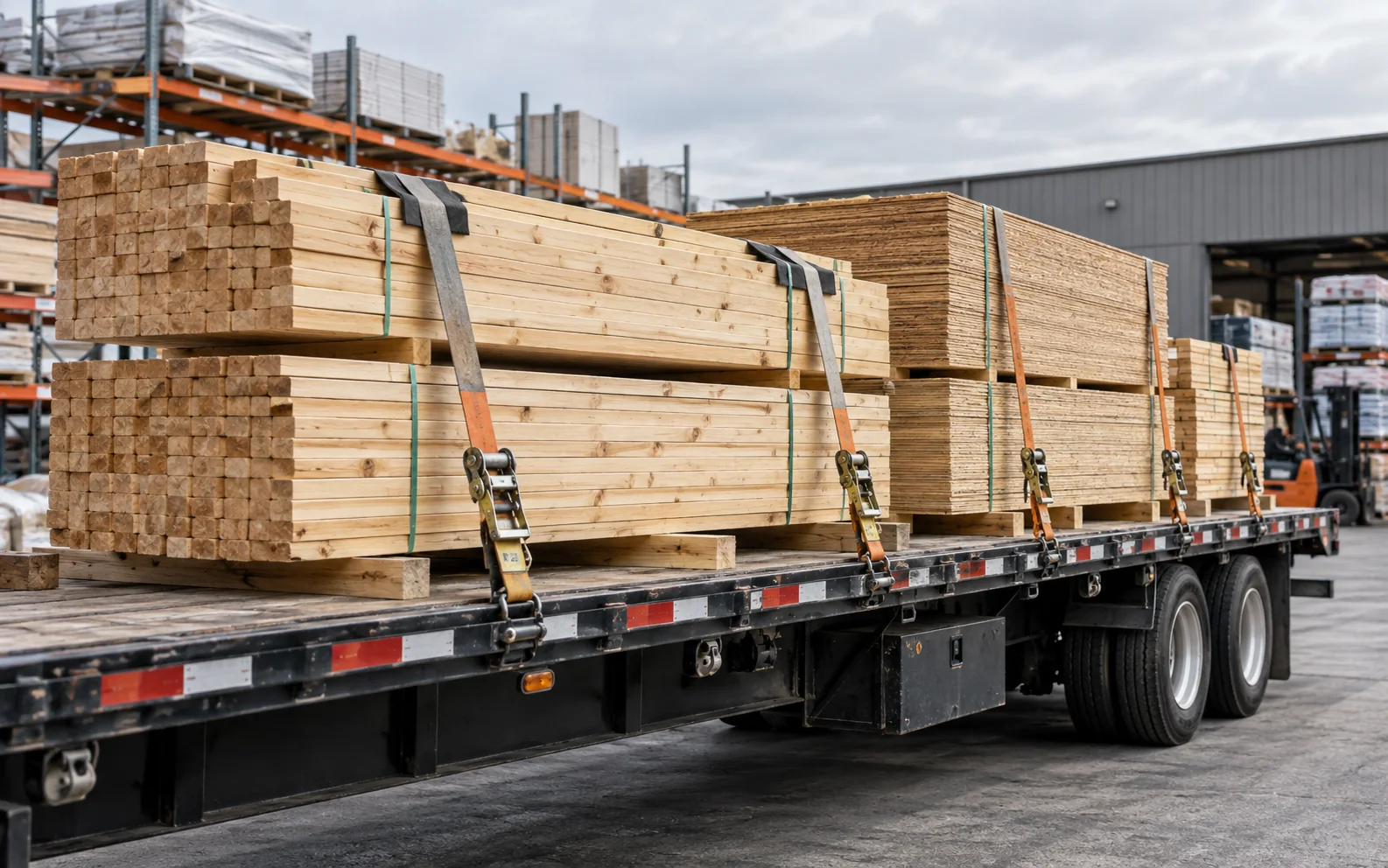
Building Materials
Framing packages and material that will not fit in a box.
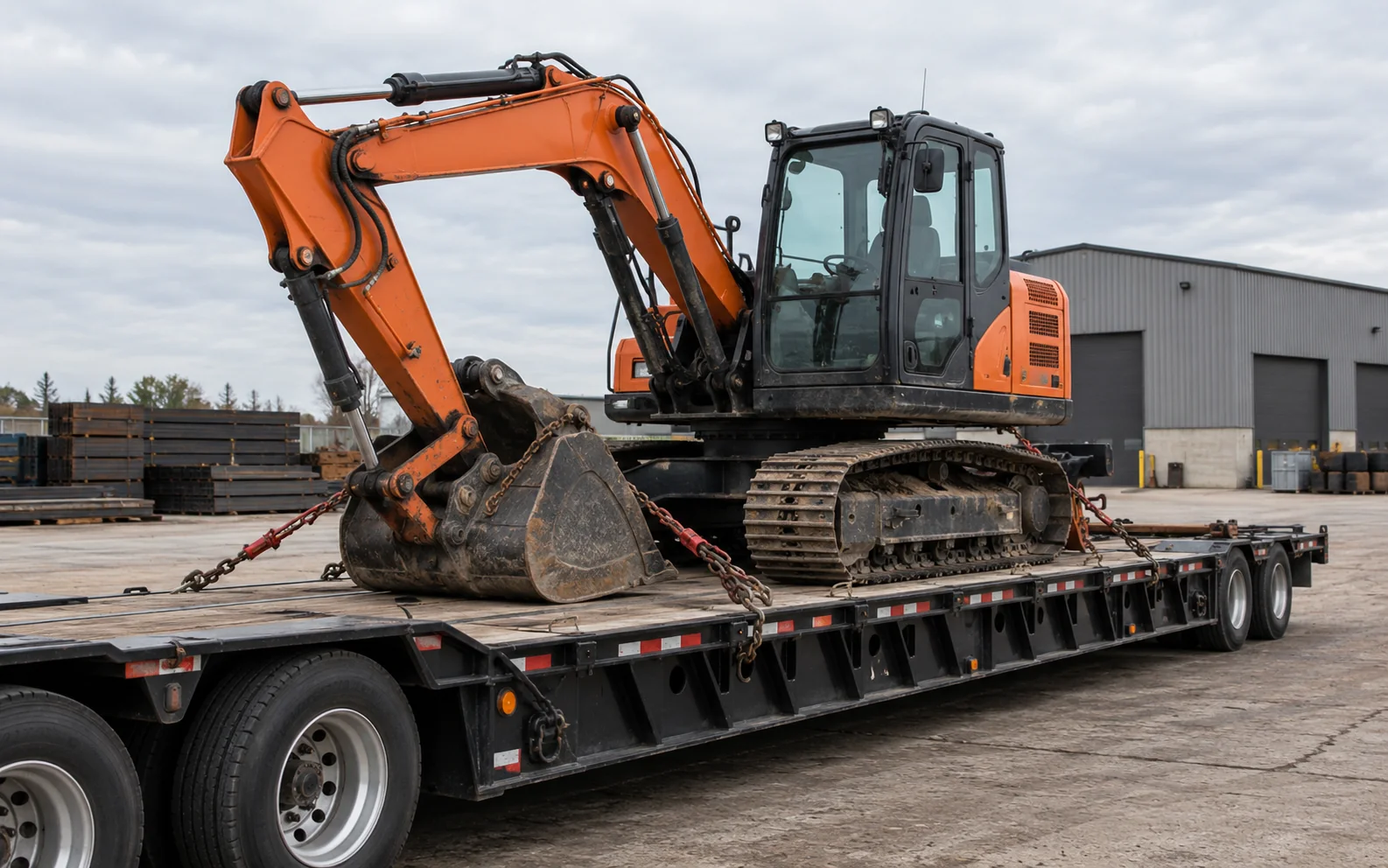
Equipment
Machinery loaded by forklift or crane where available.
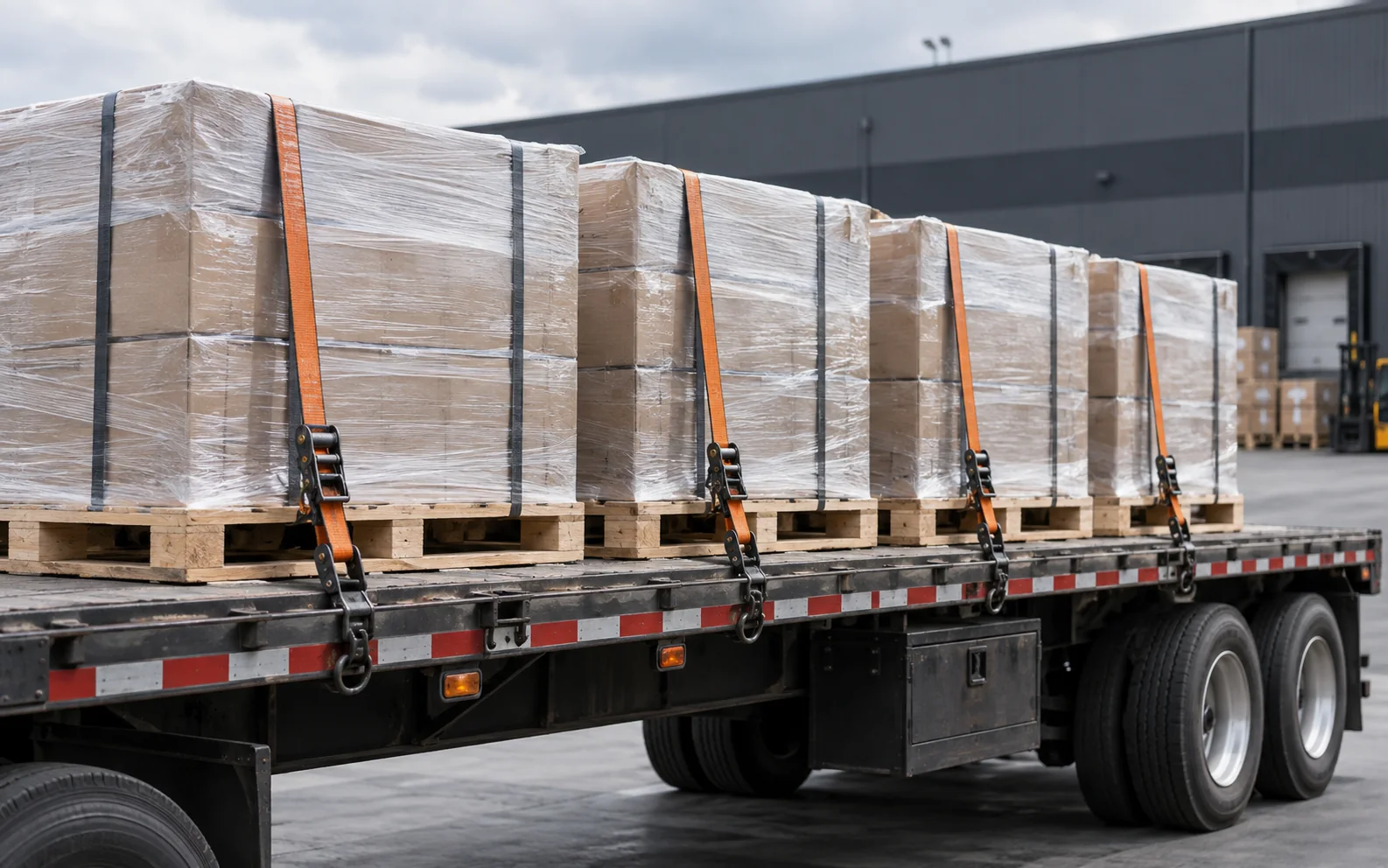
Palletized Freight
Banded and bundled loads, secured for the run.
Some material simply cannot travel in an enclosed trailer. Steel stock, beams, bundled pipe, palletized building material, framing packages and equipment all load faster and travel better on an open deck, where a forklift or a crane can reach the load from the side or from above.
SteelPoint runs flatbed hauling for exactly that kind of freight. This is cargo transport on a flatbed — we are moving your material from one place to another. It is a separate service from our roll-off container work, and it is not the transport of roll-off trucks or containers as cargo.
What we need to know about the cargo
A flatbed quote starts with the load itself. What is it, how is it packaged, and what shape is it in when it is sitting on the deck? Loose steel behaves differently from banded bundles; a single fabricated assembly behaves differently from twenty identical pallets.
Dimensions and weight matter as much as the description. Length, width, height and weight determine how the load sits, how it is secured, and whether it can travel at all. Give us your best figures and tell us where they are estimates — an approximate number you flag as approximate is far more useful than a confident guess we plan around.
- What the cargo is and how it is packaged or bundled
- Estimated length, width, height and weight
- Quantity — one item, a set of pallets, a full load
- Anything fragile, unbalanced, protruding or awkward to secure
Pickup, destination and loading
Tell us both ends of the trip. We need the pickup location and the destination, the kind of site each one is — yard, fabrication shop, jobsite, dock, residential address — and what the truck has to do when it arrives at each.
Loading and unloading is the detail that decides most schedules. Say who is providing the equipment and the labor at each end: a forklift on site, an overhead crane, a loading dock, or nothing at all. If you need us to arrange something, ask, and we will tell you plainly whether we can.
Scheduling
We agree a pickup window with you rather than committing to a fixed arrival time before we know the route, the load and what else is on the schedule. If your delivery has a hard deadline — a crane booked, a crew waiting, a site that only receives at certain hours — tell us early so we can confirm whether we can meet it before you plan around us.
What we confirm case by case
Trailer configurations, deck sizes, load capacities, securement arrangements, permitted cargo types and how far we travel are all confirmed against your specific job rather than advertised as a blanket capability. If a load is outside what we can handle, we would rather tell you at quote stage than on collection day.
From inquiry to pickup.
Tell us about the load
Send the cargo description, your best dimensions and weight, and both addresses. Flag anything unusual about how it sits or how it has to be secured.
Arrange the haul
We confirm what we can carry, the loading and unloading arrangement at each end, and a pickup window that fits the route and the schedule.
Deliver and confirm
The load travels secured on the deck and is released to whoever is receiving it at the destination you gave us.
Materials, site access, duration and availability are confirmed as part of your quote. We agree windows with you rather than publishing lead times we cannot promise.
Flatbed Hauling questions.
Steel, building materials, palletized freight, equipment and similar cargo that loads from the side or from above. Whether a specific load works depends on its size, weight and how it has to be secured, so we confirm against the details you send rather than publishing a blanket list.
We do not advertise oversize capability. If your load is outside standard dimensions, tell us the figures and we will confirm honestly whether it is something we can take or whether you need a specialist carrier.
Service coverage for flatbed work is confirmed job by job. Send the pickup and destination and we will tell you whether it is a route we can run. We do not claim nationwide coverage.
Loading and unloading arrangements are agreed in advance and depend on the site and the cargo. Tell us what equipment and labor are available at each end. We do not offer rigging services.
No. Flatbed hauling here means carrying your cargo on a flatbed trailer. It is not a service for transporting roll-off trucks or containers themselves as freight.
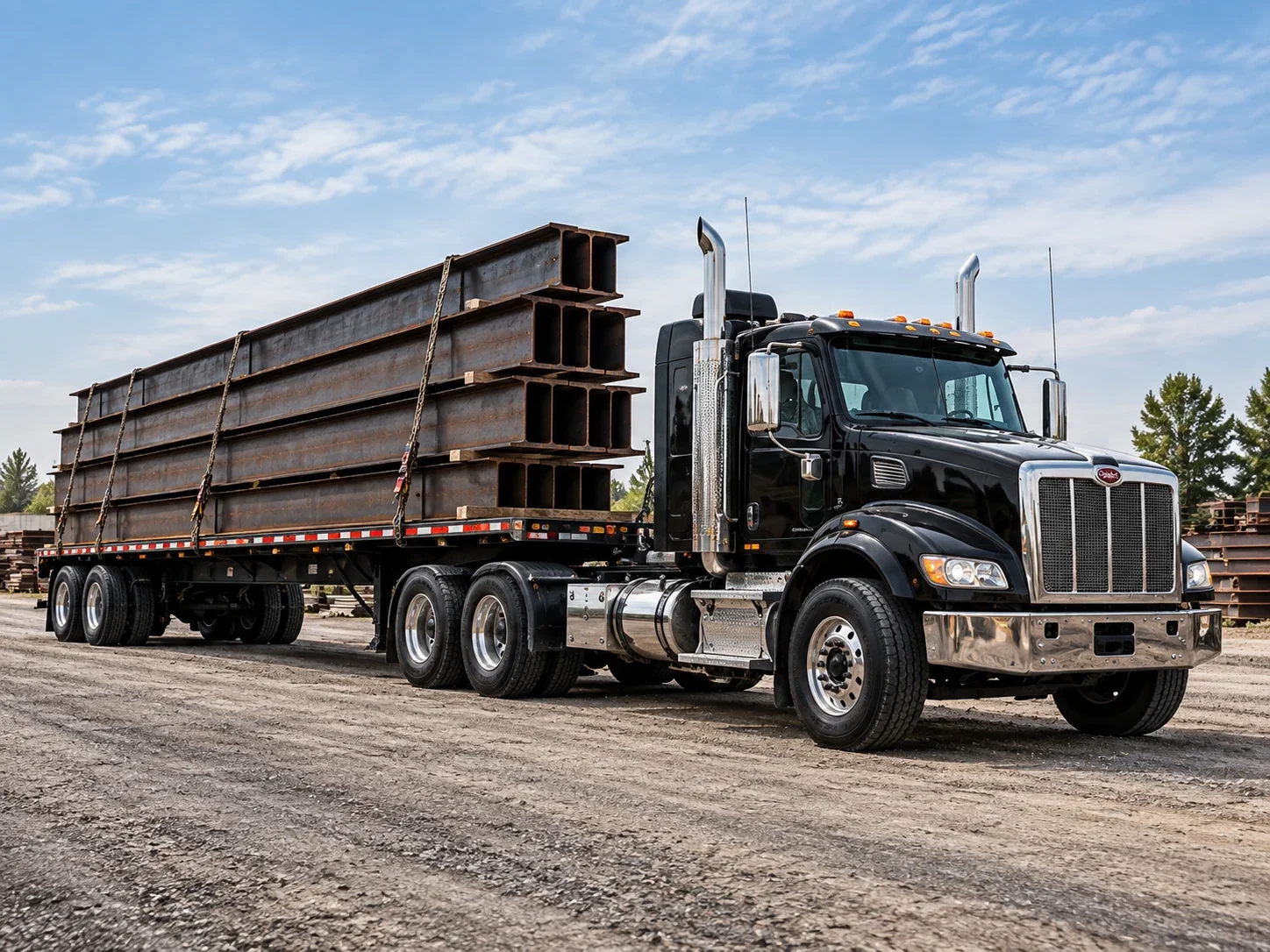
Photography shown is illustrative placeholder imagery, not photographs of SteelPoint equipment or completed projects.
Ready for a flatbed hauling quote?
Tell us the material, the site and the timing. We will confirm what fits and send a quote — no pricing is published, because every job is different.